Choosing the right wedding processional music is about more than selecting beautiful songs—it is about managing movement, spacing, and emotional impact. Whether you are featuring a traditional entrance or combining multiple songs into a continuous live sequenceArray of musical notes in a repeating pattern, your processional music sets the atmosphere for the entire ceremony.
There is often greater duration in a desired piece of music than is appropriate for the occasion. Considering the exact length of your processional music is essential for two main reasons:
- A Dignified Conclusion: The musical arrangementrefers to the structure and order of musical elements in a composition, such as melody, harmony, rhythm, and instrumentation. should be designed to conclude cleanly and naturally right as the wedding party is fully assembled, rather than fading out awkwardly or cutting off mid-phrase.
- Cost Efficiency: Because custom arrangement fees are calculated by musical duration, precise timing ensures clients only pay for the exact length of music their ceremony requires.
Custom music for a wedding processional
For couples organizing custom live arrangements—whether for a string quartet, brass group, vocal and organ, or mixed chamber ensemble—here is how to structure your wedding processional music for precise timing and effortless flow.
Essential Factors for Processional Music Planning
To coordinate ceremony entrances seamlessly with live musicians, keep these keyThe group of pitches, or tonality, that a piece of music is centered around. logistical parameters in mind:
- Aisle Length & Distance: Map the complete physical walking path, measuring from the initial entrance doorway or waiting area to the final position at the altar.
- Party Size & Order: Outline the exact headcount and sequence of everyone entering, including grandparents, parents, wedding attendants, ring bearers, flower parties, and honored guests.
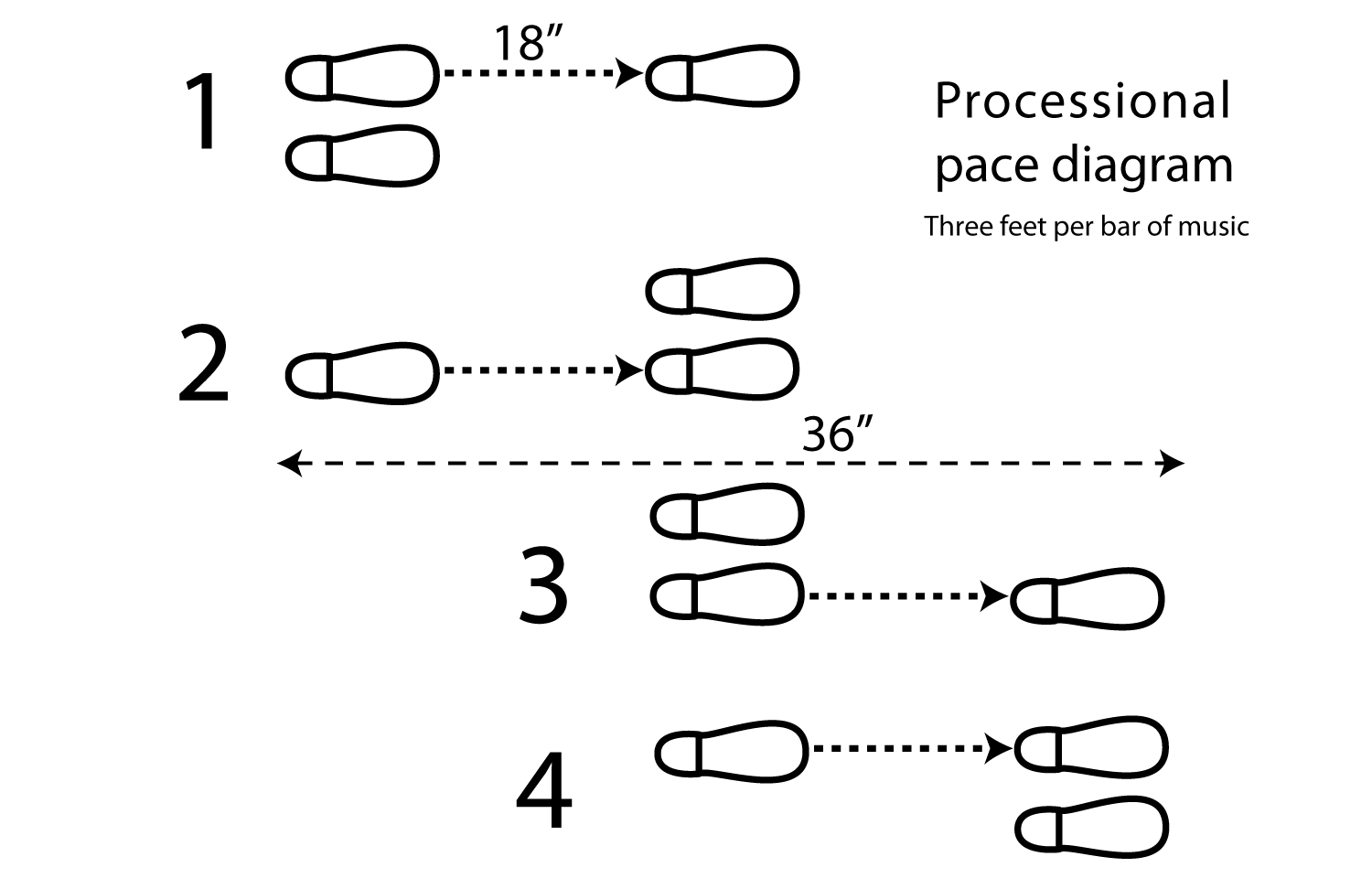
- Entry Spacing & Intervals: Allow roughly four beats (one full 4/4 measureA unit of musical time, defined by a specific number of beats.) of musical breathing room between each individual or couple entering the aisle.
- Walking Speed: Adjust your music’s duration to match a natural, deliberate walking cadenceA harmonic progression from tension through resolution rather than a rushed walk.
- Musical Continuity: Decide whether your ceremony call requires distinct song breaks between groups or a single fluid, modulating musical transition leading into the grand entrance.
- TempoThe speed at which a piece of music is performed, often indicated in beats per minute. Matching: Match the tempo (beats per minute) of your selected pieces to the physical time needed for all participants to comfortably reach their marks.
- Proportional Timing: Ensure each featured song segment gives every group their moment without lingering too long on any single entrance.
Ensemble Options for Ceremony Processionals
A string quartet—or a string quartet paired with piano, guitar, flute, or vocalists—remains the most versatile and popular choice for live processional performance.
A custom acoustic arrangement brings distinct warmth and resonance to chapels, outdoor spaces, and banquet halls alike. Almost any musical selection—from classical masterworks and jazz standards to modern pop, film themes, and rock ballads—can be tailored to match the exact duration of your aisle walk.
Structuring the Sequence of Processional Music
- The Prelude Shift: The music shifts from background prelude performance to the official entrance theme, signaling guests to settle in.
- Family & Attendant Entrances: The ensemble delivers a stately, well-paced theme to accommodate parents and attendants moving at steady four-beat intervals.
- The Entrance Pause & ModulationThe process of changing from one key to another within a piece of music.: As the aisle clears before the final arrival, the arrangement builds dynamically or shifts key, prompting guests to rise to their feet.
- The Feature Entrance: The performance transitions into your primary entrance theme, culminating naturally as you arrive at the altar.
Custom Processional Music & Arrangements
Working with custom arrangements ensures your ceremony processional hits every visual and emotional marker right on cueA short, simple melodic fragment played by one instrument to cue another instrument or section to enter., eliminating awkward fades or premature song stops.
How to Create an Edit List for Custom Arrangements
To ensure your processional music fits your exact ceremony timeline—and to keep your custom arrangingThe process of adapting a piece of music for a different ensemble, style, or performance context. costs as efficient as possible—we often pull specific sections from your favorite recording or video rather than arranging an entire song from start to finish.
Creating an edit list gives us a precise blueprint of the exact sections, verses, or choruses you want included in your custom scoreA written representation of a piece of music, including the notation for all parts of an ensemble..
Step-by-Step: Building Your Edit List
- Choose Your Source: Select the specific audio recording or YouTube video URL you want us to reference. (Make sure to share the exact link, as different versions or live recordings have different timings).
- Notea symbol used to represent a specific pitch and duration the Start and End Timestamps: Listen through the track and note the exact minute and second where each desired section begins and ends.
- Format Your Selections Chronologically: Write down each time window clearly using standard
MM:SS(minutes:seconds) timestamps.
Example Edit List Format
Suppose you want to use the introMusical material introducing the main melody or vocal entrance of a song, skip the first verseA section of a song introducing ideas, images, or story elements being conveyed by the lyric, setting up the chorus, jump straight to the chorusA section of music usually referencing the title of the song, also known as a "hook." Also can refer to a type of ensemble consisting of a collection of singers, or in Jazz, one time through the entire progression of a song or tune, which repeats with variations or solos throughout the piece., and then transition into the build-up at the end:
Source Track: [Insert YouTube Link or Song Title/Artist]
Desired Sections:
- From 0:12 to 1:34 (Intro and Main Theme)
- Then 2:10 to 2:26 (Chorus / Grand Entrance Build-up)
Total Calculated Duration: 1 minute, 38 seconds
(the previous section will be different for your desired track)
Our Preview Service: Try Before We Arrange
Before we write a single note of music or begin transcriptionThe process of notating a piece of music as it is performed, either by ear or from a recording., we will provide a paste-up audio mockupPlayback file from notation software that isn't considered a finished mix; a preliminary mix showing the structure and elements of the arrangement for approval. of your edit list.
We splice your chosen sections together into a single demoA recording created to preview the content of a show or song. Demos can also become master recordings. audio track so you can listen to the exact structural flow, test the timing against your aisle walk, and approve the sequence. This guarantees you get the exact musical moments you want—down to the second—before the final arrangement process begins.
Planning your wedding processional music? We can help you with song selections, group sizes, and custom arrangement options tailored to your wedding ceremony timeline.


Share your thoughts!